
How Arrest Warrants Work in Caroline County
An arrest warrant is a judge's written command to bring a named person into custody. In Caroline County, though, the paper rarely begins in a courtroom. A police report or a private application for a statement of charges supplies the facts. A judicial officer then weighs whether those facts support a charge at all. District Court review happens at the commissioner level, and Maryland Rule 4-212 governs the paperwork that follows. In Circuit Court, the State's Attorney brings a judge an information, a probable-cause finding, or an indictment, and asks for action. Either route ends with a Caroline County arrest warrant handed to a peace agency for execution. After the arrest, the person goes before a District Court judicial officer without unnecessary delay and no later than 24 hours, unless the warrant itself directs Circuit Court handling. The commissioner role page lays out that summons-versus-warrant decision in plain terms.
How a Caroline County Commissioner Chooses a Summons or a Warrant
The commissioner station sits inside the District Court building on South Third Street in Denton. Its number is 410-819-4610. The Judiciary posts weekday coverage until midnight, on-call hours overnight, and weekend coverage too, which makes the station the after-hours door for charging documents, probable-cause review, and release decisions in Caroline County. Not every application ends in an arrest warrant, though. A commissioner may find that a criminal summons fits better, letting the person get notice to appear instead of being taken into custody. That call turns on the charge and the facts in the application. It does not turn on who asks for a warrant.
Note: A commissioner can order a summons instead of an arrest, so a filed application does not always mean a warrant exists.
Arrest Warrants: What They Contain
A public case record for a Caroline County arrest warrant shows the frame of the matter and, when the docket reveals it, the warrant event itself. Read the status line first. Status tells you whether the case is still open; the charge line can wait.
| Warrant Type | Arrest warrant, as listed on the charging document or docket entry |
|---|---|
| Issuing Authority | District Court commissioner or judge, or a Circuit Court judge |
| Case Number | Court-generated number, shown as Case number; Caroline publishes no warrant-number format |
| Charge or Offense | The offense and classification stated in the Maryland filing |
| Issued Date | Date the warrant was ordered, when the record shows the event |
| Service and Return | Whether a peace agency served the warrant, with the return date |
| Bond | Setting type, amount, date, and judicial officer, when public |
| Status | Issued, served, recalled, or satisfied as of the status date |
Unserved Caroline County Arrest Warrant Files Stay Closed
Maryland treats court records as open by default, then carves out categories that stay shut. An arrest warrant file and its charging documents can remain closed until the paper is served or returned, or for 90 days, whichever lands first, subject to statutory exceptions. Grand jury and conspiracy matters can stay sealed even longer. A sealed indictment will not announce itself in any public result either. So a blank search does not prove a clean record. The General Provisions §4-316 text is short and worth reading on that point. For a personal matter in Caroline County, a lawyer and the issuing court can reach what the public view hides.
How Warrants Get Served in Caroline County
Serving a warrant is law enforcement's job, not the court's. The Sheriff's Office, a town police department, the Maryland State Police, or another authorized peace agency may execute a Caroline County arrest warrant, depending on who holds the case. The Sheriff's Office serves as the countywide fallback for service questions. Its non-emergency line is 410-479-2515. Headquarters sit at 9305 Double Hills Road in Denton. When you call, ask whether the paper is a Caroline County warrant, which court issued it, and whether it stands active, served, or recalled. Then ask where the court directs resolution.
Caroline County Sheriff's Office
9305 Double Hills Road, Denton, MD 21629
Service and execution questions: 410-479-2515
Note: The Sheriff's site presents a Most Wanted heading but no confirmed searchable warrant list, so a missing name proves nothing.
Caroline County Warrant Custody and the Gay Street Jail
Once an arrest happens, the questions change fast. Custody, charge, and bond belong to the county jail, not the warrant clerk. The Caroline County Detention Center sits at 101 Gay Street in Denton and answers at 410-479-2517. County staff can release an inmate's name, charge, and bond; other information stays restricted. A bond amount tells you what release costs. It does not resolve the underlying case.
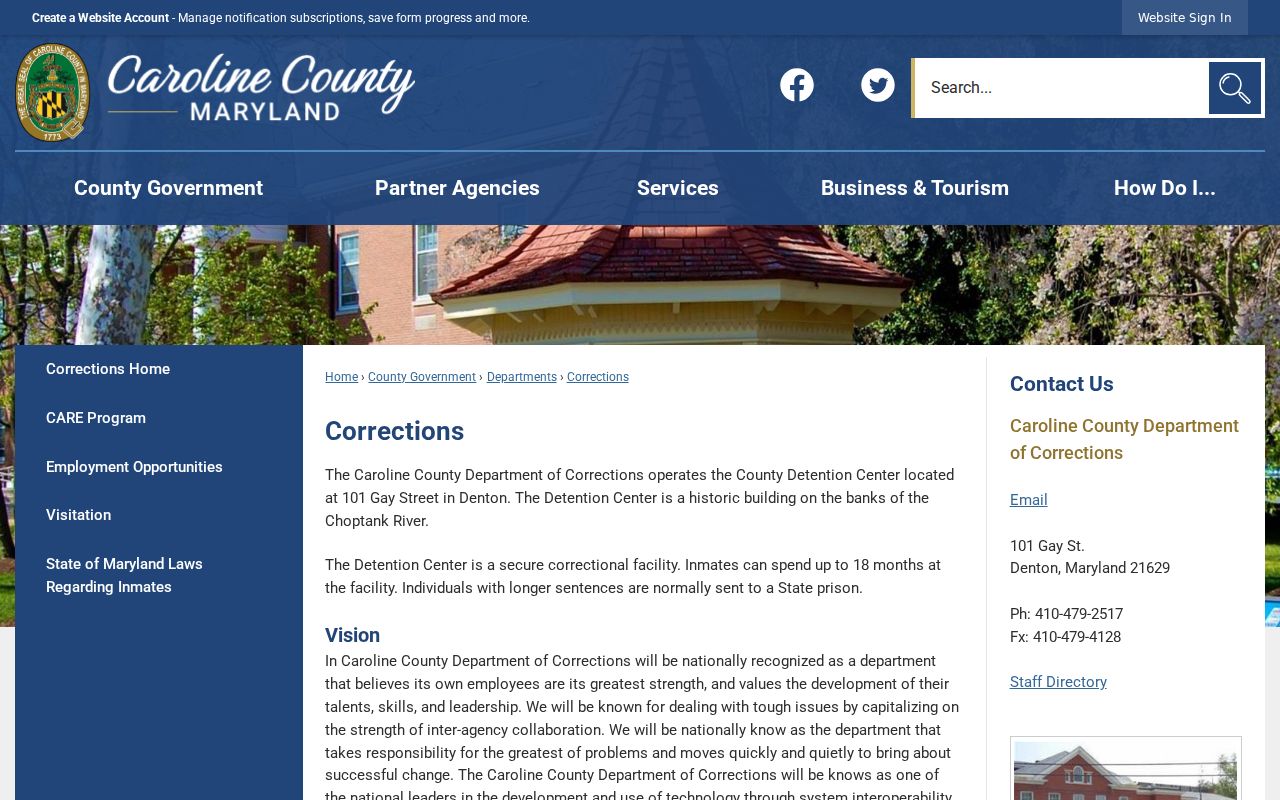
The Corrections page lists the Gay Street building and its contact block, and describes the jail as a historic structure on the Choptank River. It posts no public bond-window hours or self-surrender steps, so confirm details in Caroline County before anyone travels.
Arrest Warrants, Summonses, and Bench Warrants
Three court orders look alike on paper yet behave nothing alike. Arrest warrants, summonses, and bench warrants each send you to a different Caroline County office.
| Process | What It Is | How It Starts | Who Issues It |
|---|---|---|---|
| Arrest warrant | Order to take a named person into custody | Charging document plus a probable-cause finding | District Court commissioner or judge, or a Circuit Court judge |
| Criminal summons | Notice directing a person to appear | Same charging review, with a summons chosen instead | District Court commissioner or judge |
| Bench warrant | Court's own arrest process | Missed date, forfeited bond, or a court order not followed | The judge in the case that was already open |
| Body attachment | Order to bring a witness or party to court | Civil or family process, not a new criminal charge | The civil or family court handling the matter |
The Maryland court glossary defines all three, and the issuing clerk in Caroline County can say which one applies.
Bond Does Not End a Caroline County Warrant Case
Caroline County follows Maryland's bail rules, which allow several payment forms. Cash is the simplest. The state also accepts property with sufficient equity, approved intangible assets, certain credit or debit cards presented in person, or a professional bondsman. Two rules shape the payment. A clerk alone can accept intangible assets, never a commissioner, and cards carry a processing fee set by an outside vendor. Recognizance and unsecured bonds need no collateral. Miss court, though, and the obligation can be forfeited. Bail exists to secure an appearance; it does not decide the charge. Caroline County publishes no bond schedule and no online bond-payment portal, so the amount and the accepted method come from the court and the commissioner. The arrest and bail page covers the state rules.
Federal Warrants That Reach Caroline County
Caroline County sits in the Northern Division of the U.S. District Court for the District of Maryland. There is no federal courthouse in the county. A federal arrest warrant belongs to the federal system alone. It never appears in a state or county warrant list.
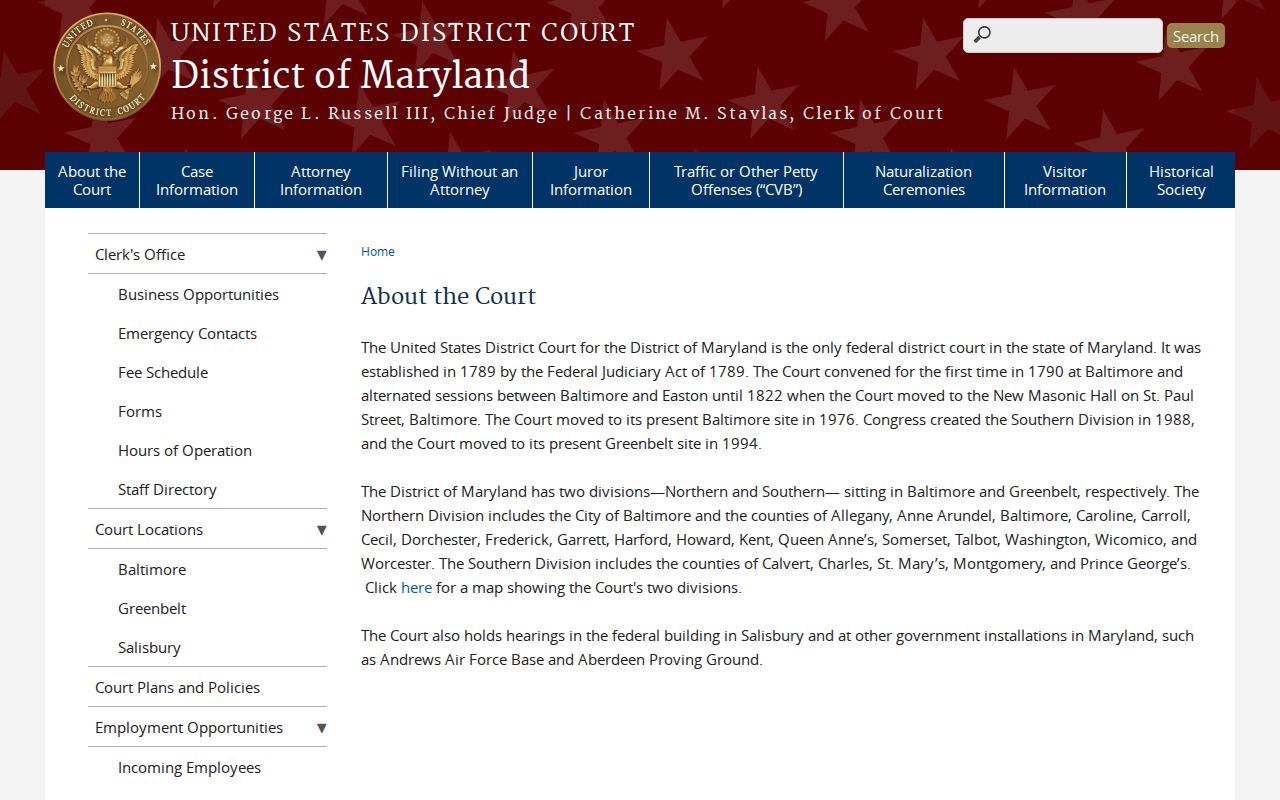
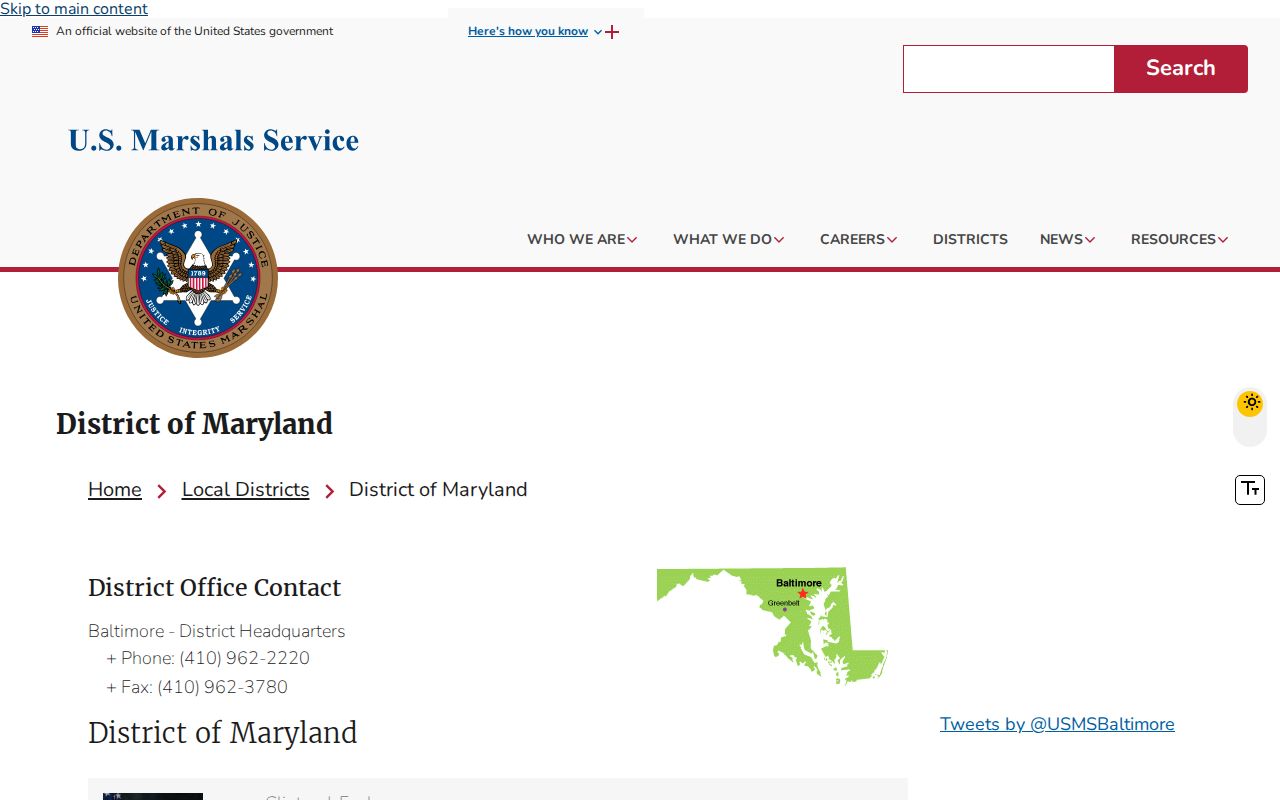
The federal district page shows the division map. Federal warrants are executed by the U.S. Marshals Service. Its District of Maryland office handles fugitive and prisoner matters with state and local partners.
Federal case access runs through PACER. It charges $0.10 per page, caps most documents at $3, and waives fees when quarterly use stays at $30 or less. The Case Locator FAQ explains the nationwide index. Federal cases can be sealed. A federal warrant is never a self-check record, even for a Caroline County resident.
Handling an Arrest Warrant in Your Name
Learning that a Caroline County arrest warrant carries your name is frightening, but guessing is the worst move. The issuing court controls what happens next. An attorney can speak for you before you appear. No Caroline County office offers a walk-in surrender window, a bond desk, or an amnesty program. Anyone claiming otherwise is guessing too. Confirm the location, the hours, and the paperwork with the court before anyone travels.
- Write down the case number, the issuing court, and the charge from the record.
- Call the issuing clerk and ask whether the warrant is active and what the court's process allows.
- Speak with a Maryland criminal attorney about a recall, a scheduled appearance, or a preset bond.
- If the court directs a surrender, confirm the agency and the identification required.
- Afterward, ask the clerk to confirm the warrant shows recalled or satisfied, and get the next date in writing.
Urgent: Do not wait for a traffic stop to settle an active Caroline County arrest warrant. Court approval and counsel can turn an arrest into a scheduled appearance.
The Caroline County warrant records page lists every office that answers warrant questions, with its phone number and address.